Showing posts with label Native-owned Business. Show all posts

Tuesday, August 9, 2016

Esk'et Tiny House B&B

All photos by Casey Bennet via eskettinyhouse.com.
Here's the photo gallery

Name: Esk'et Tiny House B&B
Tribe: Esk'et Community of the Secwepemc First Nation
Location: 1197 Wagon Road, Esk'et (Alkali Lake), British Columbia, Canada
Type: Bed and Breakfast lodging
Visiting Info: Can$139-$149 per night, year-round
Contact: Website, telephone: 250-440-5667, email: info@eskettinyhouse.com

Robert and Bettina Johnson built and own the Esk'et Tiny House, a beautiful little cottage on their property near Alkali Lake that they run as a bed and breakfast. Robert is a member of the Esk'etmc community of the Secwepemc Nation and a carpenter, and Bettina is Swiss and runs their website which includes overnight booking info, a blog, indigenous art for sale, and videos on how to build tiny houses.


Their Tiny House sleeps four in two sleeping lofts (one queen, one double) with a full bath. Groceries are provided so that you can prepare whatever kind of breakfast you prefer in the fully functional galley kitchen. The living area has a propane fireplace and there is fire pit with seating outside.


The house is also itself a work of indigenous art. The undulating roof is meant to invoke the idea of salmon, which are also carved under the front rafters, and the side door is intricately carved with bears and salmon.


The Esk'et Tiny House rents for Can$139 from October 1st to May 31st and Can$149 from June 1st to September 30th.


Resources:

Friday, July 15, 2016

Travel Journal: Aquinnah, Noepe (Martha's Vineyard), MA

Traveling with kids is always an adventure. I love to take my kids with me when I get the chance to visit Native communities so they can learn along with me. We have had some great conversations as a result of our travels, and I hope they are more aware of the presence and history of Native people in this country.

But nothing ever goes quite the way you plan when the kids are along for the ride, and you have to learn to roll with it. Sometimes, you just get handed a soggy detour and a recalculation of what you can hope to accomplish that day. This is a story about one of those trips...

They look sweet don't they? No! Don't let them out of your sight for even a second.

We recently had the opportunity to spend an off-season weekend on Martha's Vineyard at a highly reduced price for the rental house. I have been wanting to get out there for ages, but it's pretty expensive even by pricey Massachusetts' standards. The house we were offered was a big one, so the whole family went with us, including grandparents and a cousin.

I didn't have a lot of hope of making it all they way out to Aquinnah, which is on the far western "up island" end of MV away from the ferry ports and our rental in Oak Bluffs, even though I really wanted to check out the Aquinnah (Wampanoag) Cultural Center and the beautiful cliffs on Moshup's Beach. With less than 48 hours on the island and a crowd in tow, I figured we would bump around Oak Bluffs for the day, see the Campground cottages, ride the Flying Horses Carousel, eat some fried clams, and call it good as a scouting trip for future visits. At least I could figure out the ferry options, find some places to eat, and get my bearings.

But fortune smiled on me. The rest of the family was as curious as I was to scope out the whole island, so we ended up renting a car (which all the travel advice says you don't need to do) and spent a whole day making our way out to the Aquinnah Cliffs and back.


Friday afternoon we drove down from Boston to Falmouth to catch the Island Queen Ferry. There are several ferry companies leaving out of Falmouth, Woods Hole, Hyannis, New Bedford, MA, NYC, and Rhode Island: some seasonal, some year round, some are high-speed hovercraft, only Steamship Authority carries cars and all the rest are passenger only (and bikes), all with different hourly schedules. There are also water taxi services and a small airport. It takes some research and planning to even get to Oak Bluffs (or Edgartown and Vineyard Haven, the two other ferry terminals). Are you flying in to New England, taking the train, or are you driving down to the Cape? Will you take your car to the island or pay for parking in the ferry lot? Will you take bikes or rent them in Oak Bluffs? If you are already on the Cape, you can just pop over to MV for the day and back, but if you're coming in from far away and staying for some time, you need a plan.


We took the last ferry over that day and landed in Oak Bluffs right at sunset in need of some dinner and groceries for the morning. There are taxis lined up on the docks whenever the scheduled boats come in, so it was a breeze to grab a van instead of schlepping all the tired kids and luggage a mile uphill to our house. We picked up some pizza and fried clams at Giordano's and some breakfast things and beer at Jim's Package Store and Island Market and settled in around the big dining room table to make plans for the next day.

The off-season weather was too chilly and breezy for a typical day on the beach, so after much discussion, we decided to rent a car at the last minute. We called Martha's Vineyard Auto Rentals first thing in the morning on Saturday, and to my surprise, they actually had a car available that was big enough for all of us. Again, keep in mind that this is all off-season (or what they call around here "shoulder" season, which is spring and fall just outside the normal summer rush). I wouldn't wait until the last minute if you go in summer. Also, we could have used the island bus system, but that wasn't really an option for the crowd I was with for various reasons. And Aquinnah is about 20 miles from Oak Bluffs (MV is BIG, y'all!), so bikes were out for us as well.

We loaded up the kids and hit the open road. In summer, I understand that the roads are clogged with pedestrians and kids on bikes headed for the beaches, especially around the main harbor towns. But off-season we made our way up island on the State Road fairly easily. We stopped in Vineyard Haven to have lunch at the iconic Black Dog Cafe, and made a pit stop at the quirky and historical Alley's General Store in West Tisbury.


The inner part of the island is covered with rolling farms and tiny towns with peeling houses and small churches. It feels as remote and disregarded - and, ironically, as far from the ocean - as the little prairie towns I grew up in. I definitely lost track of my location in the world a couple of times as we drove through the woods and sheep pastures. After almost two hours of eating and meandering and sightseeing, we finally approached Aquinnah Circle on the far western end of the island.

There's some street parking on the circle and also a $15/day parking lot. You are welcome to use the public restroom located in the middle of the loop if you pay 50 cents.

Aquinnah was called Gay Head until the town, which is heavily populated by members of the Wampanoag Tribe of Gay Head (Aquinnah), voted to change the name in 1998. Gay Head refers to the "gaily" colored cliffs on the headland of Moshup's Beach. Aquinnah Circle, therefore, is home to the newly-restored Gay Head Lighthouse, The Wampanoag's Aquinnah Cultural Center, and a collection of small shops and restaurants owned by tribal members.

Looking back up the path from the Cultural Center (left) with the Lighthouse behind (right).

There are trails from the circle that go past the Cultural Center and down to beach where the colorful cliffs stretch back along the bright blue water and pristine sand towards the lighthouse. According the Wampanoag, Moshup the Giant lives in Aquinnah, and when he catches a whale, he bashes it up against the cliffs, leaves the bones to crumble into the sand, and then cooks the meat over an open campfire. This accounts for the streaks of red, white, and black down the fronts of the cliffs.

The Aquinnah Cliffs at Moshups Beach

(Be aware: if you walk all the way down to the point under the lighthouse, the far end of the beach is traditionally a nude beach! My father-in-law ran into a guy who didn't quite get the message that the whole beach wasn't for old naked dudes. Also, the fragile clay cliffs are now a protected National Landmark, so giving yourself a mud bath like the hippies used to do here in the 60's or climbing up them is no longer allowed.)


My girls love the beach, so everyone immediately took off down the hill to the water's edge. I took a good look and a few photos of the cliffs and then snuck back up the boardwalk to tour the Cultural Center in peace. The Center is housed in a picturesque little New England-style grey shingled cottage known as the Vanderhoop Homestead.

Open Wednesdays, Fridays, and Saturdays, 11am-4pm.

The Vanderhoop family are still a major part of the Wampanoag community here, and many of the stories told by the docent inside concerned the history of the family and the way they and the rest of their Native community lived here in Aquinnah through the centuries. There was a mishoon (a traditional canoe) and a cauldron used to render whale fat on display in the yard. Inside the house they have an fascinating old machine invented by a tribal member to sort cranberries as well as examples of the colorfully streaked Aquinnah clay pots the Wampanoag used to make for the tourists from the passenger ships that went by this end of the island in previous centuries.

Right in the middle of the tour, I started to get a string of texts. At first, I tried to reach into my purse and shut my phone off inconspicuously, but then I remembered my kids down on the beach and felt I really ought to check the messages. Good thing I did. My husband was trying to get me to come back to the car because our oldest daughter had fallen into the ocean and was soaking wet in the back of the van, sheltering from the chilly weather and cold wind. This is the daughter of mine who ALWAYS falls in the water and gets soaked from head to toe no matter what the weather or what she's wearing at the time. One of these days I'll learn my lesson and never take her to the beach in cooler weather unless she's wearing a full-body wet suit, but at least I had enough forethought to throw some extra towels in the car just in case! By the time I climbed back up the hill to the parking lot, they had her wrapped up in towels and were ready to go.


My Aquinnah adventure had to come to a rather abrupt end. I didn't fully finish the Cultural Center tour or get to visit the shops on the cliff or eat fried clams overlooking the sea at the Vanderhoop family-owned Aquinnah Shop Restaurant. As we drove right past the Orange Peel Bakery (also owned by a Vanderhoop), I struggled not to demand a quick stop for bread we didn't need lest my weary family leave me on the side of the road and continue home without me.

Oh Aquinnah, I saw more and less of you than I had hoped when I started out on this trip, but that's the way it goes. You are unbearably beautiful and so hard to get to, but I'll be back. Maybe by myself next time.


Also see my other blog post about Aquinnah as well as my posts about the related Mashpee Wampanoag Tribe on Cape Cod's mainland.

Wednesday, September 30, 2015

Skwachàys Lodge, an Aboriginial Hotel & Gallery in Vancouver

all photos from schwachays.com

Name: Skwachàys Lodge
Tribe: Northwest Coast First Nations, Urban Native community
Location: 29/31 West Pender, Vancouver, BC V6B 1R3, Canada
Type: Hotel, Art Gallery, Not-for-profit Social Programs
Visiting Info: Hotel: open daily, Reservations; Gallery: Mon-Fri 10am-4pm, Sat-Sun 11am-5pm.
Contact: Website, telephone 888-998-0797 (toll free)

Skwachàys Lodge in Vancouver is a jewel of socially responsible travel, culturally inclusive community building, and Native self-reliance. Besides the 18-room boutique hotel and the Urban Aboriginal Fair Trade Gallery in the lobby, Skwachàys Lodge and Residences is also home to affordable apartments for Native artists, workshops and art production space, and a commercial kitchen. A sweat lodge and smudge room on the roof of the hotel were especially designed as a sanctuary for Native patients who must travel to Vancouver from outlying rural areas for medical treatments.


The project was conceived in part beginning in 2002 by the not-for-profit Vancouver Native Housing Society (VNHS), who saw a need for culturally sensitive temporary housing for traveling patients. An online community space for local Native artists started by VNHS was later combined with the housing project, and has grown into a gallery and work space for 24 artists-in-residence.

The VNHS was able to mesh its social programs with a provincial and federal government-supported urban renewal project through the renovation of the Victorian-era Pender Hotel. The current façade combines the original, preserved, Victorian architecture with a longhouse and 40-foot story pole by Coast Salish artist Francis Horne Sr. in a unique way that vividly represents the area's history and community. The hotel was renamed Skwachàys (pronounced skwa-chize), the Squamish name for the land at the head of False Creek that is now part of Vancouver. And while these elements unify the layered histories of the place, the video art presentation embedded in the glass sidewalk pushes the project into the future.

Skwachàys Lodge is growing into a public, multifaceted cultural experience and self-sustaining, Native-owned business enterprise. The VNHS transforms the hotel and gallery profits into housing and artist support programs for the local Native community, thereby avoiding federal government aid programs.


The hotel offers two meeting spaces, the Cedars Boardroom and Kayachtn (The Welcome Room). An aboriginally-focused menu provided by Cedar Feast House Catering and local beers and wines are served all day in the Kayachtn Room, where the hotel also holds events such as artist meet-and-greets and storytelling.

Each of the 18 suites has it's own theme and was created by local Native artists and interior designers. The hotel's webpage provides photos and a detailed description of each room, including the names of the artist and decorators.


The Poem Suite

The Longhouse Suite


Friday, September 4, 2015

Spas in Indian Country

The Spa at Salish Lodge
photo from www.salishlodge.com

This month's issue of Native Peoples Magazine has a cover story, "Natural Beauty: Health, wellness and beauty secrets from Indigenous peoples," on Native-owned spas and traditional health and beauty treatments. It's an important topic because, as with cultural appropriations in the fashion industry, the health and wellness industry is also rife with New Age-y rip offs of Native spirituality and traditional medicine.

Here's a compiled list of the businesses mentioned in both the NPM cover article and an Indian Country Today article from last year, "5 Spas in Indian Country Using Luxury Accommodations and Native-Based Treatments."

I have also previously done a post here about the Mashantucket Pequot Tribe's Spa at Norwich Inn in Norwich, CT.

The Spa at Talking Stick Resort
(Salt River Pima-Maricopa Indian Community)
Scottsdale, AZ

Aji Spa at Wild Horse Pass Hotel and Casino
(Gila River Pima-Maricopa Indian Community)
Chandler, AZ

Salish Lodge and Spa
(Muckleshoot Tribe)
Snoqualmie, WA

Travaasa Hana
(Hawai'ian)
Hana (Maui), HI

The Skʌ:nʌ́: Spa and Ahsi Day Spa at Turning Stone Resort and Casino
(Oneida Nation)
Verona, NY

Spa Ssakwa'q'n at Coeur d'Alene Resort
(Coeur d'Alene)
Coeur d'Alene, ID

Tamaya Resort and Spa
(Pueblo)
Santa Ana Pueblo, NM

Besides spa facilities, there are also Native-owned health and beauty supplies retailers. One example that I know of is ArXotica, Inc. in Bethel, AK. Three sisters from the Quissunamiut Tribe make bath and beauty products from hand-gathered ingredients from their arctic tundra environment in Alaska.

Another botanical products shop is Laughing Berry Botanicals of Metlakatla, AK. They make health and skincare products from the locally harvested devils club plant and black seaweed. The Shearers, the husband and wife team who own Laughing Berry Botanicals and make all the products, also own Laughing Berry Gifts and a tour company that focuses on Tsimshian culture and history around Metlakatla.

And again, from an article from last year in Indian Country Today, "All-Natural Beauty: 7 Indigenous-owned Skincare and Cosmetic Lines You'll Love," here's their list of Native-owned health and skincare companies:

Native Touch (Andrews, NC)
Sister Sky (Spokane, WA)
Medicine of the People (Tucson, AZ)
Native Naturals (Norman, OK)
Native Wisdom (Chicago, IL)
Mother Earth Essentials (Alberta, Canada)
Kamamak Cosmetics (British Columbia, Canada)

I'll continue to update this list as I find more resources!

Wednesday, August 5, 2015

Poeh Cultural Center and Museum

photo from the Pueblo of Pojoaque's website

Name: Poeh Cultural Center and Museum
Tribe: Pueblo of Pojoaque
Location: 78 Cities of Gold Road, Santa Fe, NM 87506
Type: Cultural and Arts Education Center, Museum
Visiting Info: Mon-Sat, 10am-5pm; Free admission, donations accepted
Contact: Website, telephone 505-455-5041

The Poeh Cultural Center and Museum is located about 16 miles north of downtown Santa Fe, NM, at the Pueblo of Pojoaque. The Center was designed to resemble a traditional pueblo with its collection of golden adobe buildings arranged around a series of open plazas. The beautiful architecture is more than just for show. The Center has been used as a training project for teaching traditional construction methods in partnership with the tribally-owned Poeh Pueblo Construction Services Corp.

The construction training program is just one of several projects designed to further the Poeh Center's mission of preserving Pueblo culture and language, promoting artistic expression, and educating both tribal members and non-natives. Although visitors are probably focused on touring the small but well-designed museum and visiting the gift shop, the Center is also home to the Poeh Arts educational institute which includes studio space for local working artists, classes, and an internship program for tribal members who are interested in arts and museum administration. Research archives provide online access to some of the Museum's collections, a photo archive that includes over 10,000 historic and contemporary photographs, and the Oral History Documentation Project. Online access is available by request.

photo from Facebook

More programs are in the works, such as a children's museum, an amphitheater for lectures and dance exhibitions, a larger library/archive facility that would include the Pojoaque Public Library, and a garden.

Already, the Museum has been expanded to include space for artist demonstrations, a gift shop, and a rotating exhibit gallery in addition to the permanent exhibit, Nah Poeh Meng. The word Poeh is the Tewa (one of five Pueblo languages, and the one spoken at Pojoaque) word for "path" and Nah Poeh Meng means "Along the Continuous Path." The imagery of time and culture as a leading path can be found throughout the Center, including the upcoming temporary Pueblo embroidery exhibit, "Paths of Beauty," which opens August 20, 2015.

Sculpture from Nah Poeh Meng
There are more photos on the PCCM website

Nah Poeh Meng leads guests through Pueblo history in six temporal or "seasonal" spaces from the Pueblo origin story to the modern day. The Pueblo people tell this history from their own perspective through art and sculpture made by local artists and storytelling presented as audio in seven languages: Tewa, Tiwa, Towa, Keresan, Zuni, Spanish, and English. The Tewa recordings provide more detailed information for tribal members to have a deeper educational experience with their own culture and "to protect sensitive portions of Pueblo culture." Adding to this examination of the broader Pueblo culture, the current rotating exhibit, "Everything and Everybody," presents the history of the Pojoaque Pueblo specifically.

Beyond the Poeh Center, local art is on display via a self-guided tour at the nearby Buffalo Thunder Resort Casino. The Pojoaque Pueblo also offers several tribally owned restaurants, another casino resort called Cities of Gold, a Hilton Homewood Suites, an RV park, a spa, and a golf course. Guests are welcome during Pojoaque's feast days for Our Lady of Guadalupe on December 12 and July 27, as well as at the King's Day dances on January 6.


Resources:

Tuesday, July 7, 2015

Birchbark Books & Native Arts

photo from Facebook

Name: Birchbark Books & Native Arts
Tribe: All, but primarily Ojibwe and Lakota/Dakota/Nakota
Location: 2115 West 21st Street, Minneapolis, Minnesota, 55405
Type: Bookstore
Visiting Info: Open daily 10am-6pm, Thursdays until 8pm
Contact: Website, telephone 612-374-4023

Birchbark Books & Native Arts in Minneapolis is an independent bookseller than specializes in Native literature, languages, authors, and publishers. They also provide Native arts, herbs, gifts, jewelry, and community events.

Their website begins with this mission statement: "Birchbark Books is operated by a spirited collection of people who believe in the power of good writing, the beauty of handmade art, the strength of Native culture, and the importance of small and intimate bookstores. Our books are lovingly chosen. Our store is tended with care."

With cozy chairs and interesting artwork, a handmade wooden canoe hanging from the ceiling, and perhaps a collection of dogs onsite, the store looks like a reader's dream come true. There is also a loft with a "hobbit hole reading nook" just for children.

Birchbark is owned by author Louise Erdrich, who is a member of the Turtle Mountain Band of Chippewa Indians. She writes novels, short stories, poetry, young adult and children's books. According to Wikipedia, in addition to many other awards, she received the National Book Award for Fiction for her novel The Round House, and her novel The Plague of Doves was a finalist for the Pulitzer Prize for Fiction. She posts her thoughts on the books she's reading and recommends titles on the store's blog.

Ms. Erdrich and her sister also run Wiigwaas Press, which sells it's Ojibwe-language books through the Birchbark store and online shop. Online sales and shipping are available to Canada and the US.


Resources:

Sunday, July 5, 2015

Sealaska Heritage Institute's Walter Soboleff Center

Opening Day Ceremonies, May 15, 2015
photo from Facebook

Name: Walter Soboleff Center of the Sealaska Heritage Institute
Tribe: Tlingit, Haida, Tsimshian
Location: 105 S. Seward Street, Juneau, AK 99801
Type: Cultural Heritage and Research Center
Visiting Info: Summer hours: 9am-8pm, daily. Admission: $5, Seniors $4, children under 7 free.
Contact: Website, telephone 907-463-4844

Newly opened on May 15, 2015, the Walter Soboleff Center is Sealaska Heritage Institute's brand new 29,000 square foot cultural arts center in downtown Juneau, Alaska. The Center will serve artists, educators, students, community members, and visitors by providing space for exhibits, art demonstrations, ceremonial events, cultural presentations, and a retail shop. There is also a research facility with archival work and storage space and a Native languages program.

photo from Facebook

The place is so new their website isn't even complete, and I found most of the visiting information listed here on their Facebook page. The beautiful new building in downtown Juneau is named in honor of Tlingit civil rights activist and community leader Walter Soboleff and stands as "a physical manifestation upholding the traditional Native values he held dear."

Artist demonstration in the Center on Free First Friday, June 5.
photo from 
Facebook

Sealaska Heritage Institute is the non-profit arm of the Sealaska Corporation, a for-profit, Native-owned economic development and resource management corporation. SHI administers Sealaska's cultural and educational programs. Language restoration is the primary focus of the Institute, but they also support Native artists, sponsor historical and archival projects, and host the biennial Celebration. The next Celebration will take place in Juneau June 8-11, 2016.


Resources:

Friday, June 19, 2015

The Spa at Norwich Inn

photo from the Spa at Norwich Inn photo gallery

Name: The Spa at Norwich Inn
Tribe: Mashantucket Pequot Tribal Nation
Location: 607 West Thames Street, Norwich, CT 06360
Type: Luxury Hotel and Spa, Event space
Visiting Info: Check website for reservations, Kensington's Restaurant: daily 7am-10pm, Ascot's Pub: daily 11:30am-11pm (midnight Fri-Sat), Spa: Sun-Thurs 7am-8pm.
Contact: Website, telephone 1-800-275-4772

Built in 1929, the Norwich Inn hosted tons of celebrities before falling into disrepair after World War II. In 1994, the Mashantucket Pequot Tribal Nation bought the renovated property which then included a spa in addition to the original inn and golf course. The tribe renovated and doubled the size of the resort again in 2000 to make it the luxurious destination it is now.

The property includes 45 guest rooms and four suites in the Inn and 50 condo villas that have their own kitchens and sitting areas. The full-service spa offers 37 different treatments, a salon, a steam room and sauna, indoor and outdoor pools, a fitness center, and tennis courts. If you can't stay for the night, you can eat in the Kensington's Restaurant or have a drink in Ascot's Pub. The Inn also hosts conferences and weddings with in-house catering.

photo from Weddings at Norwich Inn 

The Spa at Norwich Inn is conveniently located halfway between New York City and Boston and is one of the Historic Hotels of America, part of the National Trust for Historic Preservation. It's also minutes away from the Lake of Isles Golf Courses, the Mashantucket Pequot Museum and Research Center, Foxwoods Resort Casino, and Mohegan Sun Casino, all of which are tribally-owned.


Thursday, June 11, 2015

Indian Country Golf Courses

Sewailo Golf Course at the Casino del Sol Resort (Pasqua Yaqui) in Tucson, AZ
photo from nb3consulting.com

To be honest, I'm not much of a golfer. Hand-eye coordination isn't one of my strengths. Not that my Papa didn't try to teach me. My (step) grandfather was an avid and talented golfer (and citizen of the Muscogee Creek Nation). If he were still with us, I know he would get a big kick out of the fact that his tribe now owns the Country Club in our hometown where he could only ever afford to play in the charity tournaments he won.

The stereotypes of Indians may rarely include golf clubs and rolling green courses, but the reality is that the number of tribally-owned golf courses in the US is on the rise, and some of those are award-winning facilities garnering high praise.

Atunyote Golf Course at Turning Stone Resort Casino (Oneida) in Verona, NY
photo from turningstone.com

According to the Indian Gaming Magazine map of Native-owned golf courses in the US - the most comprehensive list I could find online - there are 60 courses in 18 states, although some reports say up to 70 courses. California has nine, which is the most in any one state, with New Mexico, Arizona, Minnesota, and Michigan ranking close behind.

Willow Glen Golf Course at Sycuan Casino & Golf Resort in El Cajon, CA
(Sycuan Band of the Kumeyaay Nation)
photo from indiangaming.com

Most of these tribal courses are attached to casino resorts, and some of the golf course expansion in Native communities is merely an outgrowth of the boom in these resort properties. However, some of the rising popularity may be tied to the fame of Native golfers Rickie Fowler, Jeff Curl, and Jessie Smith, as well as Notah Begay III, four-time PGA tour winner and owner of the NB3 Consulting Group.

The mission of NB3 Consulting is "to work with American Indian Tribes on the development of new golf course projects and the renovation of existing golf properties." As a result, Begay was named one of the Golf Innovators of the Year by Golf Magazine in 2007. The courses the company has helped to build are award-winning.

photo from nb3foundation.org

The Notah Begay III (NB3) Foundation also runs golf camps for children designed to promote health and leadership development and to create access for Native youth to the game of golf. We may see quite a few more elite indigenous golfers in the coming generations! Until then, you can enjoy some Indian Country vistas while you play a round of 18 holes.

Resources:
Indian Gaming golf course map
Indian Country Today Media Network article from February 15, 2013, "Native-Owned Golf Courses Earning Topflight Honors: Turning Stone and Hickory Stick Play Through"
Golfers West article from June 3, 2013, "Who's saving golf? Native Americans"
NB3 Foundation on Facebook

Wednesday, June 3, 2015

Indian Pueblo Cultural Center

photo from @indianpueblo on Twitter

Name: Indian Pueblo Cultural Center
Tribe: Pueblo
Location: 2401 12th St. NW, Albuquerque, NM 87104
Type: Cultural Heritage Center, Museum, Library/Archive, Event Space, Café
Visiting Info: Museum: Mon-Sun, 9am-5pm (Shumakolowa Gifts closes at 5:30); Pueblo Harvest Café & Bakery: Mon-Thur, 8am-8:30pm, Fri-Sat, 8am–9pm, Sunday Brunch 8am–4pm; Museum admission: $3-$6
Contact: Website, telephone 866-855-7902


The logo of the Indian Pueblo Cultural Center in downtown Albuquerque says, "Gateway to the 19 Pueblos of NM," and it is a great spot for visitors to get a multifaceted introduction to Pueblo culture.

The museum's permanent exhibits detail the history of the people, and a series of small galleries displays contemporary art and pottery from each pueblo, describing the differences in style and form. A small theater has short films highlighting Pueblo artists, and murals from a special project that began in 1976 are displayed on the walls around the Center. The South Galleries and Avanyu Gallery host changing temporary exhibits.

One highlight of most visitors' experience is the dance exhibition hosted by the IPCC every weekend year-round. Performances are scheduled on Fridays at 2pm, and on Saturdays and Sundays at 11am and 2pm in the Courtyard.

photo from IPCC on Facebook

The Shumak'olo:wa Native Arts store is really more of an fine art dealer than a typical museum gift shop. The pieces they have for sale are carefully curated and the staff is particularly knowledgeable about traditional and contemporary Southwest Native art. Prices reflect the artistry and authenticity of the pieces, but customers can trust that they are supporting Native artists and their community. They have some of their pieces for sale online, in addition to a guide for collecting authentic Native American art.

Green chile and bacon pancakes
photo from Pueblo Harvest's Facebook page

The Pueblo Harvest Café and Bakery serves Native/Southwestern cuisine all day with a view of the Sandia Mountains. They also host live music on the patio most nights from 6-9pm. The Café is accessible even if you don't visit the Center's exhibits, and there is a private event space.

The IPCC runs a free shuttle service  between the Center, their Holiday Inn Express & Suites across the street, the Old Town section of Albuquerque, and the Albuquerque Biological Park Zoo. (Note, the Four Winds Travel Center convenience store and gas station on the corner is also Pueblo-owned.)

Friday, May 15, 2015

Article: "Native America Tribes Embrace Tourism"

A recent Men's Journal article, "Native American Tribes Embrace Tourism," explains how tribes around the country are branching out into the tourism industry to diversify their economies, educate outsiders, and reclaim their public images.

The article specifically mentions two Native-owned tour companies:

Monument Valley Simpson's Trailhandler Tours
Diné (Navajo) tour guides provide a variety of trips (Jeep tours, hiking tours, and photography tours) in the Monument Valley, Utah.

and

NDN2rs
An award-winning ethical travel company offering tours in the Great Plains and the Southwest (South Dakota, Montana, Wyoming, Nebraska, Arizona, Utah, Alaska) with a vast array of types of tours at various price points.

Monday, May 4, 2015

Aquinnah Cultural Trail and Aquinnah Cultural Center


Name: Aquinnah Cultural Trail, including the Aquinnah Cultural Center
Tribe: Wampanoag Tribe of Gay Head (Aquinnah)
Location: Martha's Vineyard (Noepe), Aquinnah Cultural Center: 35 Aquinnah Circle, Aquinnah, Massachusetts, 02535
Visiting Info: Aquinnah Cultural Center is open Wed., Fri., Sat., 11 am - 4 pm, Admission $3-$5.
Contact: Website, telephone 508-645-7900

When most people think of Martha's Vineyard, they imagine rich people in boat shoes and khaki pants embroidered with whales eating lobster dinners by the sea. But the Wampanoag people who live on the island they call Noepe have a different experience to offer visitors. The tribe's website lists special places of interest on a self-guided tour around the island called Wampanoag Way: an Aquinnah Cultural Trail.

The Trail's wide variety of destinations range from the Aquinnah Cliffs, which are the home of Moshup the Giant (from Wampanoag oral history) and a sacred place for the tribe and protected National Historic Landmark, to the Gay Head Community Baptist Church which is on the National Registry of Historic Places, to the shipwreck of "The City of Columbus" at Devil's Bridge, to the Felix Neck Wildlife Sanctuary, to the tribally-owned Alley's General Store in West Tisbury.

The points of interest provide a picture of the tribe's history on the island, cultivating cranberries and cattle, fishing for herring and eels, and whaling. The website tells the stories of many of the island's place names, such as Tashmoo the swift runner, namesake of Tashmoo's Overlook and Lake, the love story of Katama and Mattakesset, and the tale of Moshup throwing a crab into the sea to make the island of Noman's Land which became the home of the sachem Tequenoman. The Trail also depicts the tribe's interactions with English and American settlers and missionaries over the past four centuries, including their harboring of escaped slaves and Quakers at Vineyard Haven.

The Wampanoag people of Massachusetts belong to two federally recognized tribes (and several other state-recognized bands and tribes): the Mashpee Wampanoag on the Cape Cod mainland and the Wampanoag Tribe of Gay Head (Aquinnah) on the island.

Gay Head was the name of the town on the southwest end of Martha's Vineyard until 1997 when the community there, which is home to most of the tribe, voted to change it to its traditional name of Aquinnah. The two place names continue to overlap, although it seems like Aquinnah is slowly taking over.

One of the stops on the Trail is the Aquinnah Cultural Center. The Center is located on the Aquinnah Cliffs in the Edwin Vanderhoop homestead, which was built in the 1890's and restored in 2006. The Center offers tours of the home and its collections. They also host cultural events through the summer months (June-August), including the Annual Feast and Fundraiser and a yearly Native American Artisan's Festival. The Aquinnah Lighthouse is nearby, and the Cultural Center offers a combo admission price.

Transportation to the island and around it is a challenge and the accommodations are expensive, especially in the summer. Ferries carry passengers and cars to the island year-round from several ports up the New England coast, but bringing your own car is pricey and there are fewer tickets. The ferries land on the northeast side of the island, away from Aquinnah, but there is a bus service around the island, taxis, and car and bike rentals. If you go in summer, you will need to get a rental reservation early as they book up fast.


Resources:
Wampanoag Tribe of Gay Head Aquinnah
Aquinnah Cultural Center on Facebook
Gonomad.com article from 2010, "Martha's Vineyard: Homeland of the Wampanoags"
Boston Globe article from June 21, 2014, "The List: Native American-owned businesses on Martha's Vineyard."
Martha's Vineyard Magazine article from July 1, 2013, "Cultural Outpost" (list of native-owned businesses)

Wednesday, April 29, 2015

Ganondagan, Seneca Art and Culture Center, and the Iroquois White Corn Project

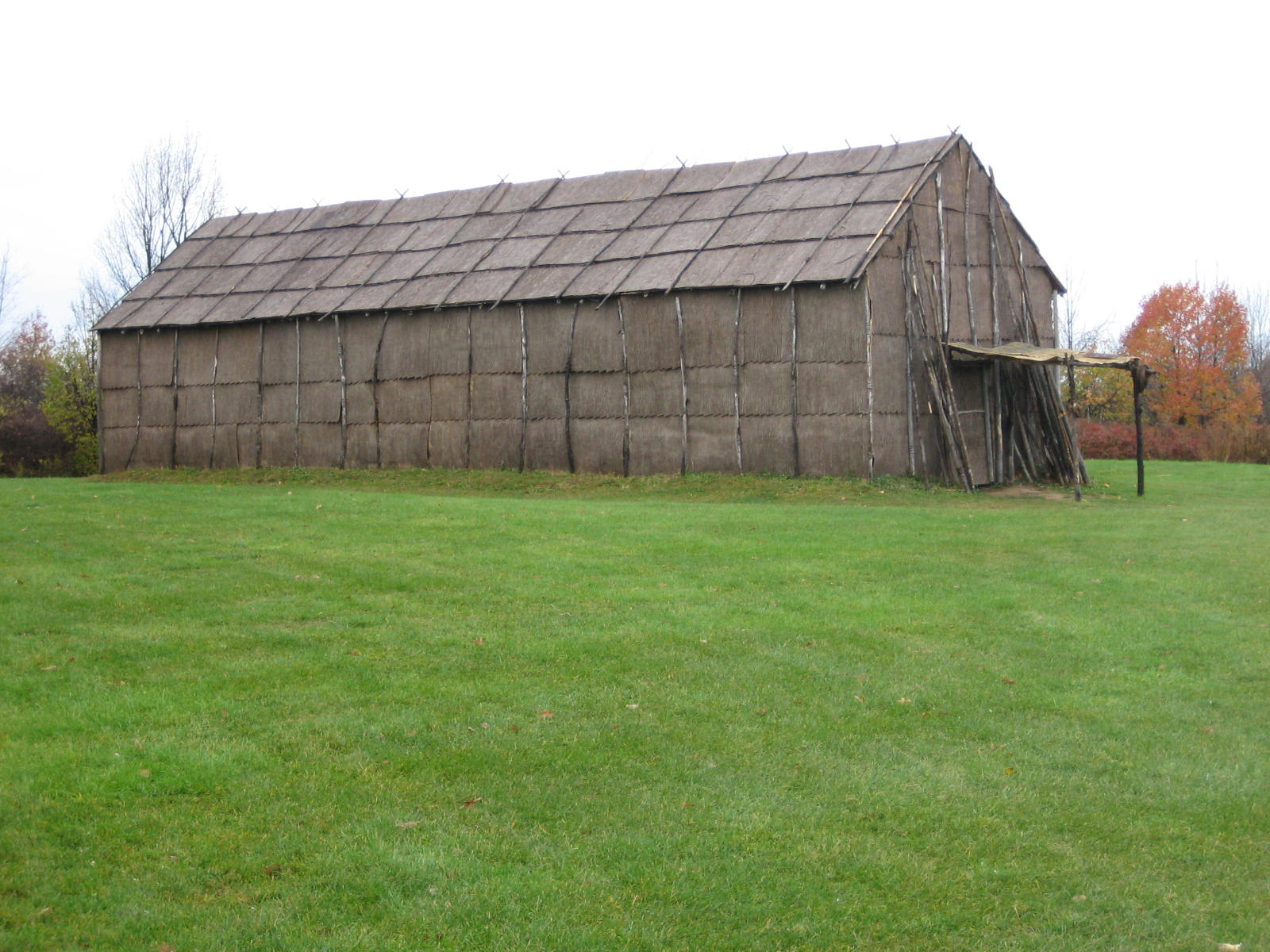
Bark Longhouse

Name: Ganondagan State Historic Site, Seneca Art and Culture Center, and Iroquois White Corn Project
Tribe: Seneca, Haudenosaunee (Iroquois) Confederacy
Location: 1488 State Route 44, Victor, New York, 14564 (near Rochester)
Type: Cultural heritage, art, and event center (SACC), historic site and hiking trails (Ganondagan), food sovereignty project (IWCP)
Visiting Info: Ganondagan - May 1 through October 31 (closed Mondays and some Sundays), trails open year round, admission $2-$3;
The Seneca Art and Culture Center - due to open July 2015;
The Iroquois White Corn Project - retail at various locations and online and volunteer opportunities
Contact: Ganondagan - Website, telephone 585-924-5848; Iroquois White Corn Project - Website, telephone 585-742-1361 or email whitecornproject@gmail.com to volunteer.

Ganondagan is the re-creation of a 300-year-old Seneca town in upstate New York. Admission includes access to the Visitor Center, a replica 17th-century bark longhouse, and three guided hiking trails. Group tours are available for a fee, but self-guided trail hikes are free year-round. The Granary Trail leads up to the Fort Hill mesa where the settlement's protected granary and fort once stood. Illustrated signs along the way tell the story of the day in July 1687 when the French Canadian Governor General Marquis de Denonville's campaign destroyed the original town. An exhibit by Seneca artist Carson Waterman and a video program are located in the Visitor Center. The Friends of Ganondagan also host a summer day camp for high school students focused on conservation issues.

A new 17,300 sq.-ft. Seneca Art and Culture Center is scheduled to open in October of 2015. It will include a gift shop, outdoor exhibit space and gardens, and gallery space offering changing exhibits on Seneca art, history, and culture. There will also be performance and event space, including a catering kitchen, with plans for year-round cultural and community events.


The Iroquois White Corn Project, located nearby on County Road 41 at the Ganondagan State Historic Site Farmhouse, describes itself as a "non-profit, 'agri-cultural' business." The Project grows, processes, and sells the heirloom white corn, as well as creates educational programs to promote its continued production and consumption. They use and teach traditional methods for planting, growing, and processing the corn as a cultural preservation effort, and they accept volunteers at every step of the process from fields to sales.You can buy Iroquois white corn products and merchandise at Ganondagan or online. Their website also lists stores, restaurants, and distributors in New York that sell or use their corn and flour.


Resources:
The Seneca Nation of Indians
Seneca Nation of Indians Tourism
The Haudenosaunee Confederacy
About "Food Sovereignty" at Native American Food Sovereignty Alliance