Showing posts with label Travel Journal. Show all posts

Friday, July 15, 2016

Travel Journal: Aquinnah, Noepe (Martha's Vineyard), MA

Traveling with kids is always an adventure. I love to take my kids with me when I get the chance to visit Native communities so they can learn along with me. We have had some great conversations as a result of our travels, and I hope they are more aware of the presence and history of Native people in this country.

But nothing ever goes quite the way you plan when the kids are along for the ride, and you have to learn to roll with it. Sometimes, you just get handed a soggy detour and a recalculation of what you can hope to accomplish that day. This is a story about one of those trips...

They look sweet don't they? No! Don't let them out of your sight for even a second.

We recently had the opportunity to spend an off-season weekend on Martha's Vineyard at a highly reduced price for the rental house. I have been wanting to get out there for ages, but it's pretty expensive even by pricey Massachusetts' standards. The house we were offered was a big one, so the whole family went with us, including grandparents and a cousin.

I didn't have a lot of hope of making it all they way out to Aquinnah, which is on the far western "up island" end of MV away from the ferry ports and our rental in Oak Bluffs, even though I really wanted to check out the Aquinnah (Wampanoag) Cultural Center and the beautiful cliffs on Moshup's Beach. With less than 48 hours on the island and a crowd in tow, I figured we would bump around Oak Bluffs for the day, see the Campground cottages, ride the Flying Horses Carousel, eat some fried clams, and call it good as a scouting trip for future visits. At least I could figure out the ferry options, find some places to eat, and get my bearings.

But fortune smiled on me. The rest of the family was as curious as I was to scope out the whole island, so we ended up renting a car (which all the travel advice says you don't need to do) and spent a whole day making our way out to the Aquinnah Cliffs and back.


Friday afternoon we drove down from Boston to Falmouth to catch the Island Queen Ferry. There are several ferry companies leaving out of Falmouth, Woods Hole, Hyannis, New Bedford, MA, NYC, and Rhode Island: some seasonal, some year round, some are high-speed hovercraft, only Steamship Authority carries cars and all the rest are passenger only (and bikes), all with different hourly schedules. There are also water taxi services and a small airport. It takes some research and planning to even get to Oak Bluffs (or Edgartown and Vineyard Haven, the two other ferry terminals). Are you flying in to New England, taking the train, or are you driving down to the Cape? Will you take your car to the island or pay for parking in the ferry lot? Will you take bikes or rent them in Oak Bluffs? If you are already on the Cape, you can just pop over to MV for the day and back, but if you're coming in from far away and staying for some time, you need a plan.


We took the last ferry over that day and landed in Oak Bluffs right at sunset in need of some dinner and groceries for the morning. There are taxis lined up on the docks whenever the scheduled boats come in, so it was a breeze to grab a van instead of schlepping all the tired kids and luggage a mile uphill to our house. We picked up some pizza and fried clams at Giordano's and some breakfast things and beer at Jim's Package Store and Island Market and settled in around the big dining room table to make plans for the next day.

The off-season weather was too chilly and breezy for a typical day on the beach, so after much discussion, we decided to rent a car at the last minute. We called Martha's Vineyard Auto Rentals first thing in the morning on Saturday, and to my surprise, they actually had a car available that was big enough for all of us. Again, keep in mind that this is all off-season (or what they call around here "shoulder" season, which is spring and fall just outside the normal summer rush). I wouldn't wait until the last minute if you go in summer. Also, we could have used the island bus system, but that wasn't really an option for the crowd I was with for various reasons. And Aquinnah is about 20 miles from Oak Bluffs (MV is BIG, y'all!), so bikes were out for us as well.

We loaded up the kids and hit the open road. In summer, I understand that the roads are clogged with pedestrians and kids on bikes headed for the beaches, especially around the main harbor towns. But off-season we made our way up island on the State Road fairly easily. We stopped in Vineyard Haven to have lunch at the iconic Black Dog Cafe, and made a pit stop at the quirky and historical Alley's General Store in West Tisbury.


The inner part of the island is covered with rolling farms and tiny towns with peeling houses and small churches. It feels as remote and disregarded - and, ironically, as far from the ocean - as the little prairie towns I grew up in. I definitely lost track of my location in the world a couple of times as we drove through the woods and sheep pastures. After almost two hours of eating and meandering and sightseeing, we finally approached Aquinnah Circle on the far western end of the island.

There's some street parking on the circle and also a $15/day parking lot. You are welcome to use the public restroom located in the middle of the loop if you pay 50 cents.

Aquinnah was called Gay Head until the town, which is heavily populated by members of the Wampanoag Tribe of Gay Head (Aquinnah), voted to change the name in 1998. Gay Head refers to the "gaily" colored cliffs on the headland of Moshup's Beach. Aquinnah Circle, therefore, is home to the newly-restored Gay Head Lighthouse, The Wampanoag's Aquinnah Cultural Center, and a collection of small shops and restaurants owned by tribal members.

Looking back up the path from the Cultural Center (left) with the Lighthouse behind (right).

There are trails from the circle that go past the Cultural Center and down to beach where the colorful cliffs stretch back along the bright blue water and pristine sand towards the lighthouse. According the Wampanoag, Moshup the Giant lives in Aquinnah, and when he catches a whale, he bashes it up against the cliffs, leaves the bones to crumble into the sand, and then cooks the meat over an open campfire. This accounts for the streaks of red, white, and black down the fronts of the cliffs.

The Aquinnah Cliffs at Moshups Beach

(Be aware: if you walk all the way down to the point under the lighthouse, the far end of the beach is traditionally a nude beach! My father-in-law ran into a guy who didn't quite get the message that the whole beach wasn't for old naked dudes. Also, the fragile clay cliffs are now a protected National Landmark, so giving yourself a mud bath like the hippies used to do here in the 60's or climbing up them is no longer allowed.)


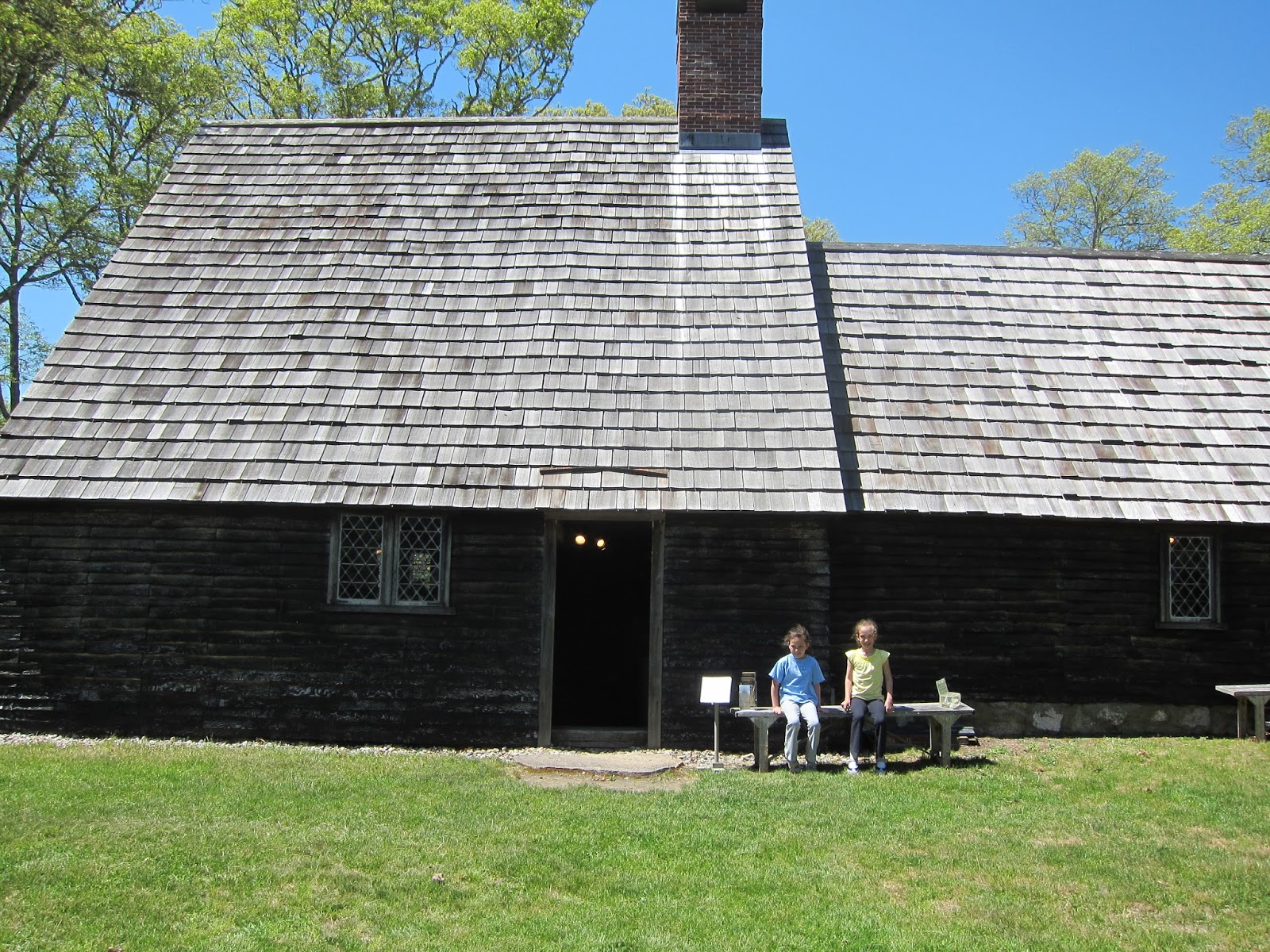
My girls love the beach, so everyone immediately took off down the hill to the water's edge. I took a good look and a few photos of the cliffs and then snuck back up the boardwalk to tour the Cultural Center in peace. The Center is housed in a picturesque little New England-style grey shingled cottage known as the Vanderhoop Homestead.

Open Wednesdays, Fridays, and Saturdays, 11am-4pm.

The Vanderhoop family are still a major part of the Wampanoag community here, and many of the stories told by the docent inside concerned the history of the family and the way they and the rest of their Native community lived here in Aquinnah through the centuries. There was a mishoon (a traditional canoe) and a cauldron used to render whale fat on display in the yard. Inside the house they have an fascinating old machine invented by a tribal member to sort cranberries as well as examples of the colorfully streaked Aquinnah clay pots the Wampanoag used to make for the tourists from the passenger ships that went by this end of the island in previous centuries.

Right in the middle of the tour, I started to get a string of texts. At first, I tried to reach into my purse and shut my phone off inconspicuously, but then I remembered my kids down on the beach and felt I really ought to check the messages. Good thing I did. My husband was trying to get me to come back to the car because our oldest daughter had fallen into the ocean and was soaking wet in the back of the van, sheltering from the chilly weather and cold wind. This is the daughter of mine who ALWAYS falls in the water and gets soaked from head to toe no matter what the weather or what she's wearing at the time. One of these days I'll learn my lesson and never take her to the beach in cooler weather unless she's wearing a full-body wet suit, but at least I had enough forethought to throw some extra towels in the car just in case! By the time I climbed back up the hill to the parking lot, they had her wrapped up in towels and were ready to go.


My Aquinnah adventure had to come to a rather abrupt end. I didn't fully finish the Cultural Center tour or get to visit the shops on the cliff or eat fried clams overlooking the sea at the Vanderhoop family-owned Aquinnah Shop Restaurant. As we drove right past the Orange Peel Bakery (also owned by a Vanderhoop), I struggled not to demand a quick stop for bread we didn't need lest my weary family leave me on the side of the road and continue home without me.

Oh Aquinnah, I saw more and less of you than I had hoped when I started out on this trip, but that's the way it goes. You are unbearably beautiful and so hard to get to, but I'll be back. Maybe by myself next time.


Also see my other blog post about Aquinnah as well as my posts about the related Mashpee Wampanoag Tribe on Cape Cod's mainland.

Wednesday, July 15, 2015

Travel Journal: Mashantucket Pequot Tribal Museum

Even though as a white person I always feel a little bit like I'm intruding at pow wows, as someone who grew up in tribal towns and now lives in an area with comparatively few Native people, I also get a warm feeling of familiarity and nostalgia for my childhood. Finding myself in a room full of Native people again last week at the Pequot Museum choked me up a little bit, I have to be honest. The adorable little kids in regalia who were already great dancers only doubled down on my emotional state. Beautiful!


The Mashantucket Pequot Tribal Museum and Research Center holds an annual Educational Pow Wow that introduces pow wow culture, etiquette, and meaning, and explains the different styles of dances and accompanying regalia. My girls and I drove down to Connecticut to attend the most recent one on July 9th.


The museum is on the Mashantucket Pequot Reservation near Ledyard, CT, between Norwich and New London in the far southeastern corner of the state. It's a couple hour's drive for us, so we didn't get there until late morning. The pow wow had already started, and the museum was crowded with school or summer camp groups.

The program is run through twice, in the morning and again in the afternoon, with a lunch break in between. That meant we were able to catch the tail end of the morning presentation, grab some lunch in the Pequot Café, do a quick trip through the exhibits as the field trips cleared out for the day, and still catch the afternoon presentation. There is plenty to do and see at the Pequot Museum even without an event like the pow wow, so we crowded a ton of activity into one afternoon.

View of the Green Roof

First things first, the museum is gorgeous. It's won a bunch of architectural awards since it opened in 1998, and the modern building is surrounded by a lush green forest that visitors can enjoy on the hiking/walking trails that surround the grounds or from the 185 ft. tall Observation Tower. The 65,000 sq. ft. "green roof" is an eco-friendly garden of soft grass - growing on the roof of the exhibit halls! A round, glass atrium just inside the front entrance, called the Gathering Space, is two stories of sunlight with that backdrop of thick, green trees.

The Gathering Space

Up in the balcony looking down over the Gathering Space floor, the Pequot Café serves local, native, seasonal foods cafeteria style. I jumped at the chance to get an Indian taco - something I grew up with in Oklahoma, but rarely see now that I live in New England. Frybread is just perfect for sopping up buffalo chili and salsa and melted cheese. Yum! My daughters had a grilled cheese and a peanutberry (peanut butter and whole summer berries) on thick, homemade whole wheat bread and a side of sweet potato fries. A small market area also sells White Earth Nation and Red Lake Nation products.


Back down a long ramp under the Gathering Space atrium, there are two floors of exhibit space that trace the Pequot Nation from the last Ice Age to the present day. The impressive, recreated pre-colonial Pequot Village would probably be the most memorable part for most people, my kids included, but I was struck most by an audio/visual presentation in a mock farmhouse about the tribulations of the people during the 20th century. I think most Native American history, when you can get it at all, focuses on the devastations of Native communities during the colonial or westward expansion periods. Rarely are we encouraged to ask what was happening with Native people in 1920 or 1940 or 1960, and yet the legal and cultural blows were still being delivered.

My girls also loved the outdoor 1780s Farmstead exhibit.

The "Mission Mishoon" dugout canoe in progress

Another striking exhibit was the Portrait Gallery which consists of large black and white photos of current Pequot tribal members, young and old. The Pequots are a particularly racially diverse tribe, and seeing a presentation of cohesive tribal identity amongst such a diverse-looking group of people was inspiring. The same was true of the dancers in the Gathering Space above when we followed the sound of drums back up the ramp to take our seats around edge of the atrium.

My daughters (ages 6 and 8) were enthralled with the dancing. The younger one was totally Team Jingle Dance and the older was Fancy Shawl all the way. We skipped out before the group round dance at the end because the girl were begging to see the Observation Tower before it closed at 4:30, but I couldn't keep them from dancing down the hallway, across the parking lot, and at the rest stop McDonalds on the way home.

Dancing

The Educational Pow Wow (and the Museum as a whole) provided a great opportunity to have several good talks with my girls about appreciating without taking, about Halloween costumes, and about Native Americans being "a people with a past, not of the past." We enjoyed ourselves, but we also definitely learned a lot.

For more photos, click here to see The Norwich Bulletin's photo gallery of the Pow Wow.

Thursday, July 2, 2015

Travel Journal: Peabody Essex Museum

If everything is bigger in Texas, then everything is just a little bit smaller in New England. This is especially true of the pockets of Native culture quietly persevering across the region. 

Small tribal museums are tucked away in towns all around the Northeast if you go looking: The Mashpee Wampanoag Indian Museum in Mashpee, MA, the Tomaquag Museum in Exeter, RI, the Tantaquidgeon Museum in Uncasville, CT, the Mt. Kearsarge Indian Museum in Warner, NH, and the Abbe Museum in Bar Harbor, ME. [Please let me know if I'm missing anyone! I'd be grateful for the info.] 

On the other hand, the Mashantucket Pequot Museum and Research Center in Ledyard, CT, is a substantial, anchoring institution for the region. And a few other prominent organizations have important presentations on Native culture within their programs. The Wampanoag Homesite at the Plimoth Plantation comes to mind.


One little gem within a larger institution is the current Native American art exhibit at the Peabody Essex Museum in Salem, MA. It's quite small - only one room of the museum - and only a portion of their whole Native American art collection, the rest of which is not on display. Even their Oceanic Art collection, into which they categorize their South Pacific Native art, is not currently on display. However, the pieces I was able to enjoy there were definitely worth the morning I spent driving up to Salem to see them.


East India Marine Hall, the original exhibit hall

As I wrote in a previous postThe Peabody Essex is one of the oldest continuously operating museums in the United States and has one of the oldest collections of Native American artThe PEM got its start in 1799 when the East India Marine Company was chartered from Salem's community of shipping captains with the provision to create a museum from the interesting things they brought home from their world travels.

Richard Orr's model of Cleopatra's Barge, the first private ocean-going yacht built in America. Constructed in Salem in 1816, it was eventually sold to King Kamehameha II, who renamed it Ha'aheo o Hawai'i ("Pride of Hawaii"). A life-size recreation of the Barge's stateroom, including some original furnishings, can also be seen at the PEM.

As a result of this shipping and trading history, the collection is not representative of local tribes, but is made up primarily of art and cultural artifacts from the Pacific region (in addition to their larger collections of maritime and Asian export art). Much of their work focuses on pieces that were created by indigenous people specifically for trade, and then relating that historical art to contemporary pieces from the same tribes.

Heiltsuk dancer's mask from coastal British Columbia about 1845.
photo from pem.org

The current exhibit is Raven's Many Gifts: Native Art of the Northwest Coast. It showcases traditional and contemporary art from Pacific Northwest tribes, focusing on themes of "Living Stories, Family Connections and Market Innovations." The exhibit explains central concepts of Northwest tribal art, such as formlines, the dark bands of color that outline the image, and the prevalence of family crests and insignia, most of which include specific animals such as Raven.


Richard Hunt and John Livingston's piece Door (1984) illustrates some of these concepts. Killer Whale and Raven are commonly featured in traditional stories and family crests. Killer Whale, carved by Livingston on the outside of the door, sometimes embodies the souls of deceased chiefs, and Hunt painted Raven on the inside of the door. Raven appears on his Kwakwaka'wakw father's family crest. The art on the door is a continuance of the storytelling about these animal characters and their connections to the artists' families.


It was once common for PNW tribes to tattoo their family crest motifs on their faces and bodies, but when missionaries and other colonists in the 19th Century started pressuring them to stop, Native people created jewelry like these bracelets to display their family crests without attracting the negative attention of their colonizers.

In the 1800s, Haida artisans started making fancier forms of their traditional pipes to sell to sailors and travelers as curios or souvenirs. The boar on this pipe may have been influenced by the figureheads of the ships and the houses are Euro-American style to appeal to their customers.


One of the most beloved pieces from their previous and highly successful Shapeshifting exhibit is now on display as part of Raven's Many Gifts. Nicholas Galanin's (Tlingit/Aleut) "Tsu Heidei Shugaxtutaan part 1 and part 2," which translates to "We Will Again Open This Container of Wisdom That Has Been Left in Our Care" (2006), is comprised of two videos, one of a breakdancer over traditional Tlingit music and the other of a traditional dancer in regalia dancing to EDM. The piece is also online, and can be viewed here.

Galanin's Bear Mask Vol. 9 (2006) is also in the exhibit. The piece is a modern twist on traditional Tlingit woodcarving by using laser cut pieces of paper to form the mask.

This exhibit, like PEM's other recent Native Art exhibits, pushes itself to turn a very old collection of curios from white traders and explorers into a modern conversation with living Native artists that discusses the meaning and self-representations within the classic forms and contemporary twists in tribal art. As former Deputy Director and Curator of Native American Art John R. Grimes said in his essay, "Curiosity, Cabinets, and Knowledge: A perspective on the Native American Collection of the Peabody Essex Museum,":


The new paradigm opens the locked doors of the cabinet, allowing us to move beyond possessive knowledge of objects and admitting new relational knowledge and aesthetic experience.

My only disappointment might be that my tuna wrap and can of soda in the Atrium Café were underwhelming. There is a fancier Garden Restaurant with beautiful outdoor seating in the Asian Garden and Terrace, but I had to pick my kids up from school and didn't have time for the linen-napkin treatment so I can't comment on the quality. Considering the rising popularity of Native cuisine and the fact that no place in Boston is doing it yet (the Pequot Museum has the Pequot Café), the PEM might consider treating patrons to some truly local fare. Don't mind me suggesting that Sherry Pocknett has a catering company in Mashpee that specializes in traditional Wampanoag cuisine! I might drive up just for lunch if I could get smoked mussels and johnnycakes with cranberry chutney.

Beautiful spot for lunch, though.

Raven's Many Gifts: Native Art of the Northwest Coast is on display at the Peabody Essex until December 27, 2015.

Friday, May 29, 2015

Travel Journal: Cape Cod, MA

Memorial Day Weekend presented us with an opportunity to brave the crowds on Cape Cod and check out some of the places I've already blogged about here. We were able to visit the Aptucxet Trading Post Museum in Bourne and the Old Indian Meeting House in Mashpee. I was very sad that the Mashpee Wampanoag Indian Museum hasn't reopened for the summer after the renovation they did this past winter. They are planning a big Opening Day on June 3rd. I'll have to see if I can get back down there this summer.

Getting out onto Cape Cod by car is usually a trial as there are only two bridges over the Cape Cod Canal, the Sagamore Bridge to the north near Sandwich, MA, and the Bourne Bridge to the south between Buzzard's Bay and Bourne, MA. Most people take the Sagamore because it's on the expressway from Boston straight onto the Mid-Cape Highway (US Hwy 6), but because we were headed to Aptucxet first, we went south to Bourne. We were traveling on a holiday weekend so there should have been terrible traffic, although Memorial Day is a bit off-peak (July and August) and the weather wasn't very hot for day tripping beach-goers. We weren't sure quite what to expect, but we prepared for the worst and there was no traffic at all Saturday at mid-day. We zipped right across the Bourne Bridge, no problem. Lady Luck smiled on us!


The Aptucxet Trading Post Museum is just over the bridge and through the town center of Bourne, backing up to the Canal. In fact, it is possible to enter the property from the the Canal Bikeway and skip the town-side parking lot and the property's quirky collection of other buildings. Besides the historic trading post, there is a Dutch windmill which contains an art gallery, the old Sagamore Information Booth which was relocated here and is now the gift shop/ticket booth, and Grover Cleveland's personal train station for his Bourne summer home, Grey Gables.


But we came to see the trading post, so we hurried past towards the back of the property. The Plimoth Colony sent two men down the coast to this location on the Cape's south side to establish a trade house with both the Native people and the Dutch traders from New Amsterdam. They hoped to make enough money from trade in local natural resources like furs to pay off the debt they owed to their corporate backers. The Wampanoag Indians introduced the pilgrims to wampum, their quahog shell beads, which were adopted by the traders as the first local legal tender in the American colonies.


The current building is a replica, but it was built on the original surviving 1627 stone foundation which you can see in the basement. Much of the "replica" building is made from wood salvaged from another 17th-century house, and the exposed beams, wide plank floors, and salt grass insulation displayed in a cut-out of the old plaster wall are amazing to see.


The site administrator, Carol Wynne, who is Wampanoag herself, gave a us a kid-appropriate tour of the property, answered questions, and showed our six- and eight-year-old daughters all kinds of neat things around the trading post. She had beaver and otter pelts for the kids to touch and explained about how the pilgrims and their English clients preferred beaver pelts the Native people had already used because the scratchier outer hairs were worn off and the short undercoat and broken-in hide were softer. Ms. Wynne also showed the girls a ball made of leather and stuffed with deer fur and a traditional game made with deer bones and string where you try to catch bone rings on a stick. She showed us the gardens where they are growing traditional Native crops (the three sisters, Jerusalem artichokes, etc.) and local wildflowers alongside kitchen and medicinal herbs like sassafras for stomach aches.

This sign was an interesting piece: it clearly attempts to celebrate Native participants at the trade house, and it does use their real names (Ousamequin instead of Massasoit, Iyanough instead of Hyannis, Nope instead of Martha's Vineyard), but then it says, "Wetamo. Squaw Sachem of Pokanoket. Consort of Wamsutta, An American queen who later bravely met inevitable defeat" and "Iyanough. 'Indeed not like a savage save for his attire.'" A relic I guess, but it's not quite the complimentary citation it's trying to be. It was important to read their names, though, and see their personal marks.

The museum contains display cases of artifacts dug up around the old foundation during an archaeological excavation in the 1920's. We had a look at the small collection of deer bone tools, Dutch ceramic pipes and kitchen ware, and old panes of the diamond-patterned colonial leaded-glass windows. There was also a small display of the plants and animals the Wampanoag hunted and gathered in the area - and introduced to the English - during the four different seasons. Ms. Wynne showed us some Wampanoag pump drills and explained how they made the labor-intensive wampum beads from clam shells.


Our next stop was up Highway 28 in Mashpee, where we stopped to see the Old Indian Meeting House. It's a working Wampanoag tribal meeting house, so it was closed to visitors, but we were able to walk around and have a look from the outside.


Originally built in 1684 on the site of an even older Mashpee church (1670), the Old Indian Meeting House or Old Indian Church is the oldest Native American church in the Eastern US and the oldest church on Cape Cod. It's so old that it was moved to it's current plot from other location and remodeled in 1717!

Mashpee was one of the colonial era "Praying Towns." The Pilgrim settlers began a campaign to convert the local Native people to Christianity beginning around 1646. The towns required Native people who lived there to assimilate to European lifestyle as well as religion, but they did offer a certain amount of political self-determination, protection, and community, although that independence was slowly eroded over time. In 1833, the Meeting House became the central hub of the Mashpee Revolt led by Reverend William Apess (who was Pequot and a Methodist minister), as a protest against white intrusion on tribal land and governance.


Even though it is a reminder of the complicated relationship between Native tribes and Christianity, it has functioned as a church, a gathering place, a school, and a burying ground for the tribe for more than 300 years. On Memorial Day weekend, the burying ground around the Meeting House was decorated with flags on the military graves - a testament to large number of Native veterans that have served in the US Armed Forces.


The tribe recently renovated it, and it looks amazing. Even through the long, narrow windows, you can see the beautiful exposed beams inside. It would be a gorgeous spot for a wedding!

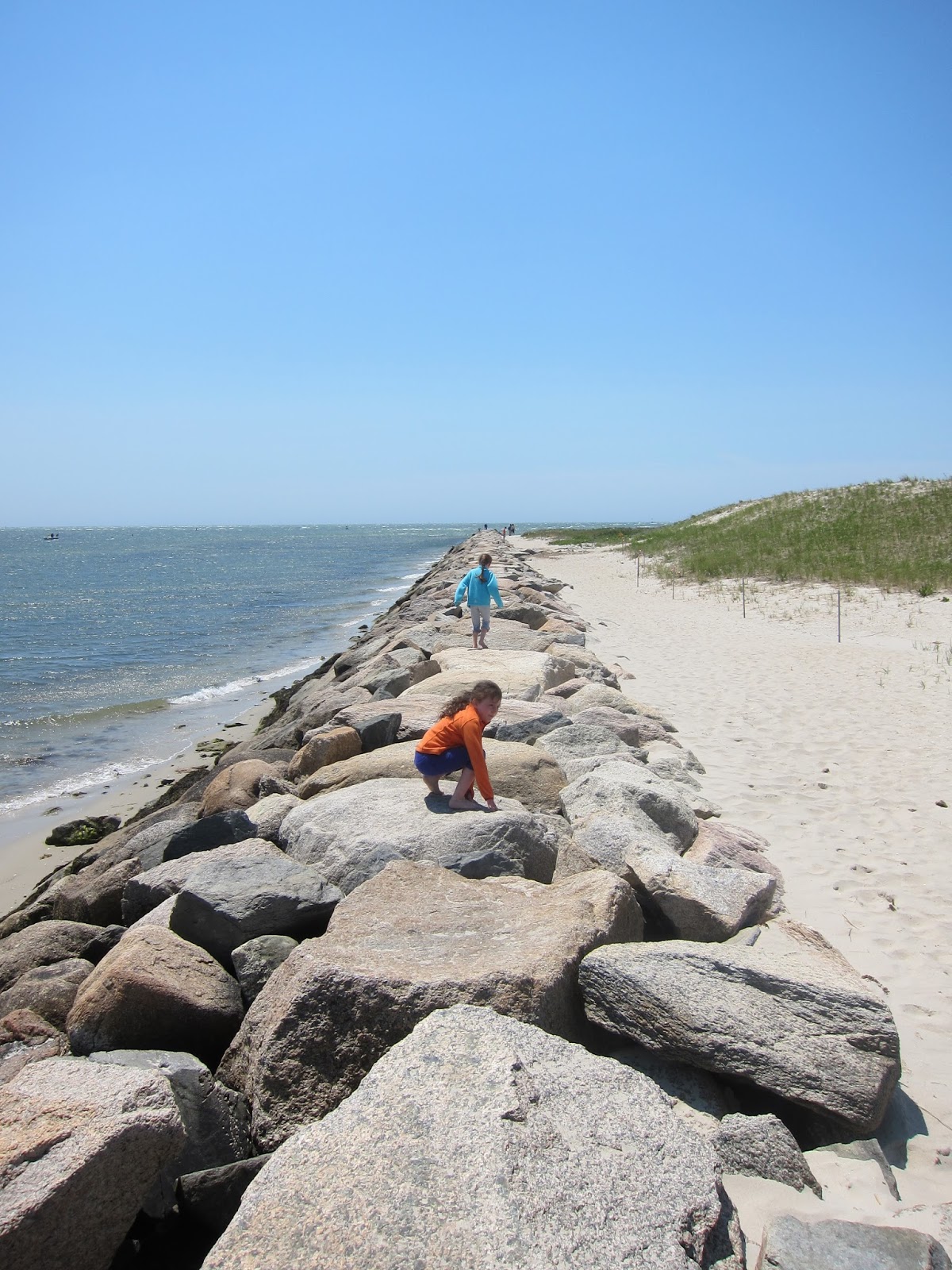
And because it is Cape Cod, we hit some beaches (even though we had to wear our fleece jackets), ate tons of fried seafood (we liked Fresh Ketch in Hyannis and the Fish Pier Market in Chatham) and way too much salt water taffy, and rode two different carousels. It would be amazing to be there in high summer when the beaches are inviting, but I'm not sure I could stand the crowds.

"Welcome to Hyannis 'Have a Fun Day!'"

Kalmus Beach, Hyannis

Dunbar Point, Hyannis

Kandy Korner, Hyannis

Heritage Museums & Gardens, Sandwich

Chatham Lighthouse Beach, Chatham

Chatham Lighthouse and US Coast Guard Station

There's still plenty to do. On future trips, I hope to finally get over to see the Mashpee Wampanoag Indian Museum in Mashpee. We also didn't have time to take the ferries out to Noepe (Martha's Vineyard) and Nantucket to visit the Aquinnah Wampanoag destinations out there. Additionally, this summer 2015, the Pilgrim Monument Provincetown Museum is holding a special video exhibition called "Captured 1614: Our Story - A Wampanoag History" about the kidnapping of 27 Native men (including Squanto) who were sold into slavery in Spain.